Categories
Uncategorized

‘Sharks may be present’

I don’t know why I didn’t think of self-publishing my novel right from the beginning. Decades ago, when I made my first start on a novel, and before I’d even written chapter one, I’d bought a copy of Writers’ and Artists’ Yearbook. So I’d absorbed the important information that to get a publishing deal, I’d need an agent. (By the way, the ideas for that first novel lie in fading ink in a folder, never to be finished.)

Many years later, in 2017, I joined Jericho Writers (then called the Writers’ Workshop), as I’d written a children’s picture book, and wanted to learn how best to seek publication via an agent. Through Jericho Writers I was learning fast about the world in which books get published. I didn’t pay much attention to all the workshops about self-publishing, because, because – why? I think it was the messages about marketing which put me off; I knew I wouldn’t be effective as my own self-publicist. And I was insufficiently interested in the technicalities of how to do it. Amazon this and Kindle that made me shudder. I wanted an agent, and not to have to market myself, because some authors managed to do that without social media and getting followers (aka potential readers and book buyers), didn’t they? I knew this from reading so many blogs and biographies of published authors. 

When I’d finished writing ‘What we have in common’, had feedback from beta readers, submitted to agents, and had some shreds of encouragement within their rejections; done an online self-edit course, and tried a few more agents, with a few more rejections and smidgens of interest, including one full manuscript request, I put the book to one side, and got on with writing my second book. I might never see that first book published, but I felt better: it was writing I wanted to do.
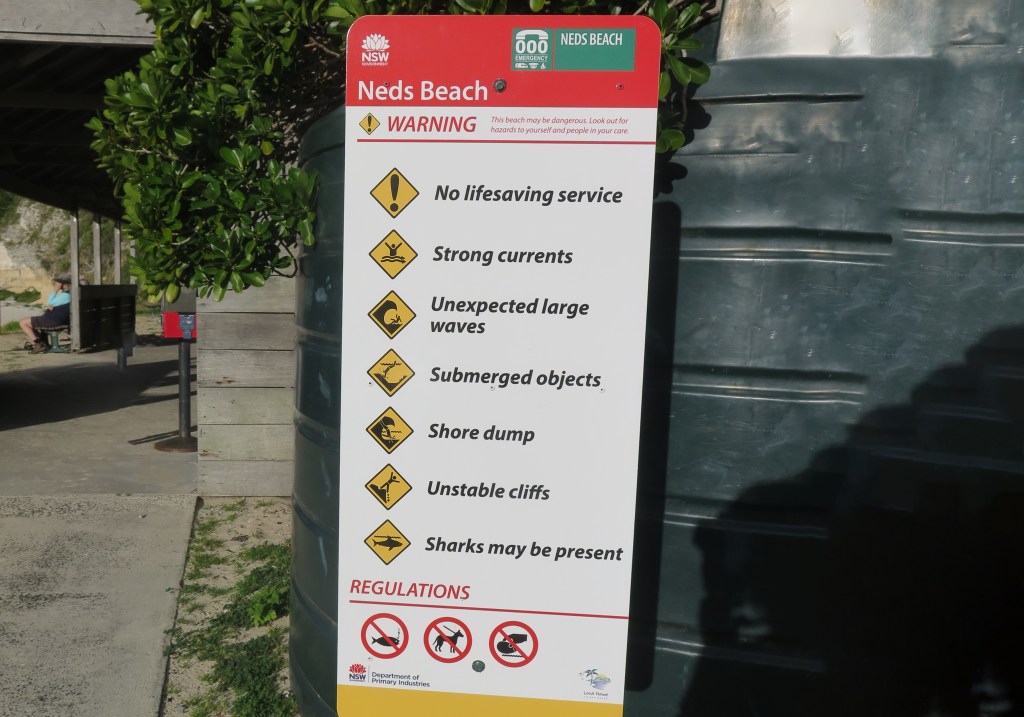
Ned’s Beach, Lord Howe Is, NSW

What happened next was the decision to publish the book myself, which came to me out of the blue. And the shape my self-publication would take was as clear; I’m a not-for-profit author, and all proceeds from the book would go to a charity. I was prepared to pay for publication myself. The context was December, 2020, in the midst of the coronavirus pandemic, when, I think for many of us, our priorities felt different. 

It turns out I had absorbed a surprising amount of information from all of my not paying much attention to how to self-publish, and I knew that sharks may be present, and that in self-publishing, I was on my own – no lifeguards. I knew that there would be no editor handed to me to help with copy editing or proof-reading, let alone an illustrator to design a cover or a PR expert to plan a launch. And if I was going it alone, I knew I would be wholly dissatisfied if the book was printed with even one mistake, so the responsibility for my work was entirely mine. 

Part two of this blog about how I swam with the sharks and published my novel  will be in a couple of weeks time. Till then…
Categories
Uncategorized

World Book Day

It’s Thursday morning, 10th March, as I sit writing this blog. This time a week ago, on World Book Day, I was back in a classroom, rearranging the tables and chairs with six Year 8 students. We needed to sit round one large table. All of them had read What we have in common, and I was about to lead them in a writing workshop. So there I was, completing some loop or other on the teaching spiral of my professional life – how could I have foreseen this forty years ago when I started my career teaching biology? And I couldn’t have foreseen how fascinating and satisfying it was to teach using my own novel as a tool. 

I started with questions which they had submitted via their teacher, Nicky, and built those into our discussion, and into their each imagining a protagonist and a story that they would write. They were eager and quick learners, their curiosity and readiness to ask more questions about my writing process and novel reminding me of that feeling of how thrilling and joyful it is to work with learners in this way. I didn’t feel retired. 

Starting with questions was how I’d also prepared for the talk I gave to the whole year group beforehand. That was such a lot of fun, too, and I was very impressed with the range and depth of the questions I’d been given.  “Do you think the characters always make the right decisions?” and, “How did you know that you wanted to start writing?” See what I mean? 

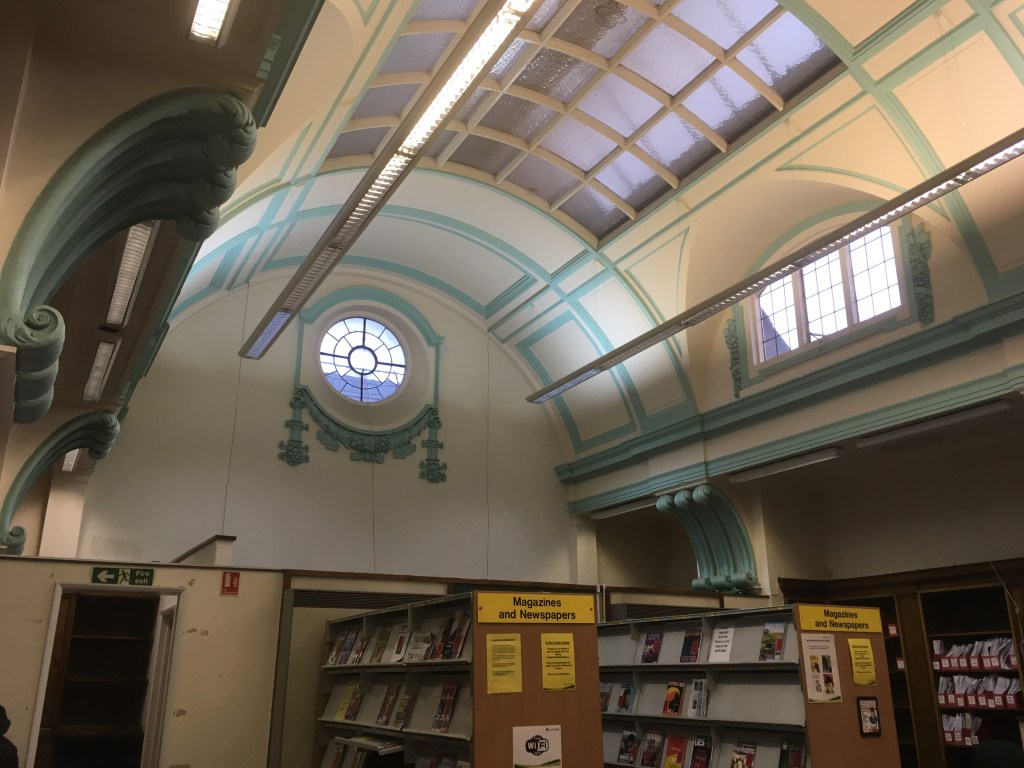
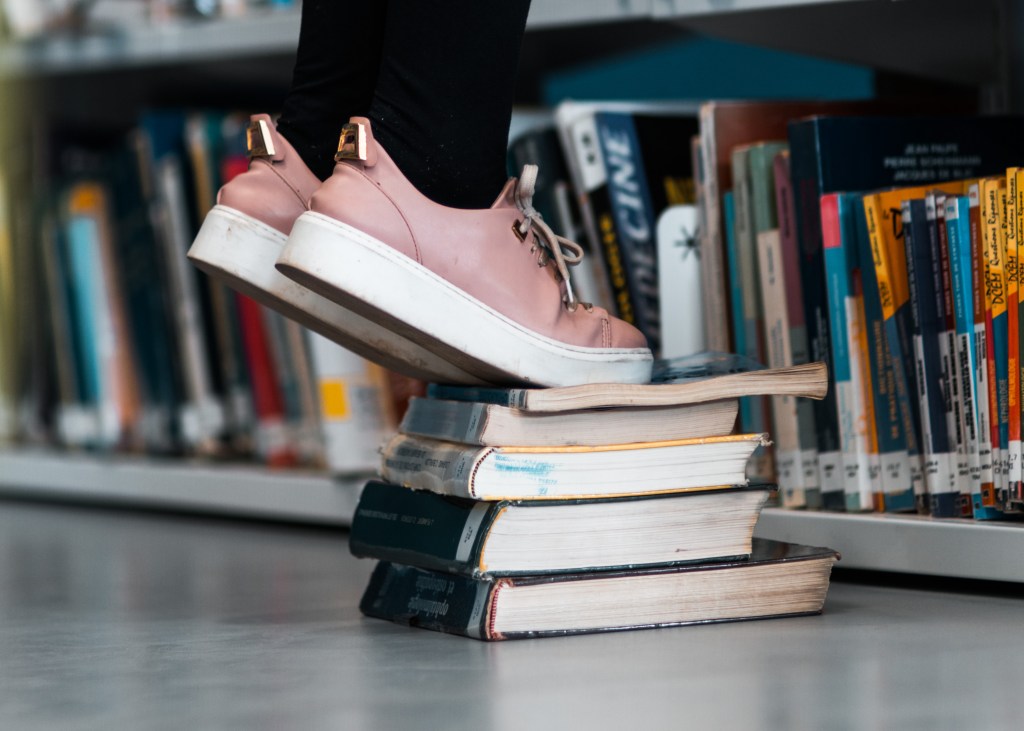
Islington Central Library Reading Room

I’m honoured to have been invited into the school to talk to Year 8 students on this World Book Day as a local author, and that they had had my book read to them in their daily reading time in tutor groups – all within three months of its publication! The feedback was wonderful to get, and the opportunity to contribute to WBD was a huge privilege. Could I pick out one highlight? That’s tricky. One from the year group assembly, and one from the workshop, yes. Making the year group laugh, obviously that was one. And being told by the workshop group – six keen readers agreed on this – that they had never read a YA story dealing with the main subject of Portia’s storyline, and that it was good that they now had.  That felt as important as being told they’d enjoyed reading it.

Thank you to all of the students in Year 8 at Minehead Middle School, and to staff, and especially to Nicky Gibbs, Head of English.  Your costumes were marvellous, and your questions, your attention and your responses combined to shine a powerful light on why stories for children and young people matter so much. 

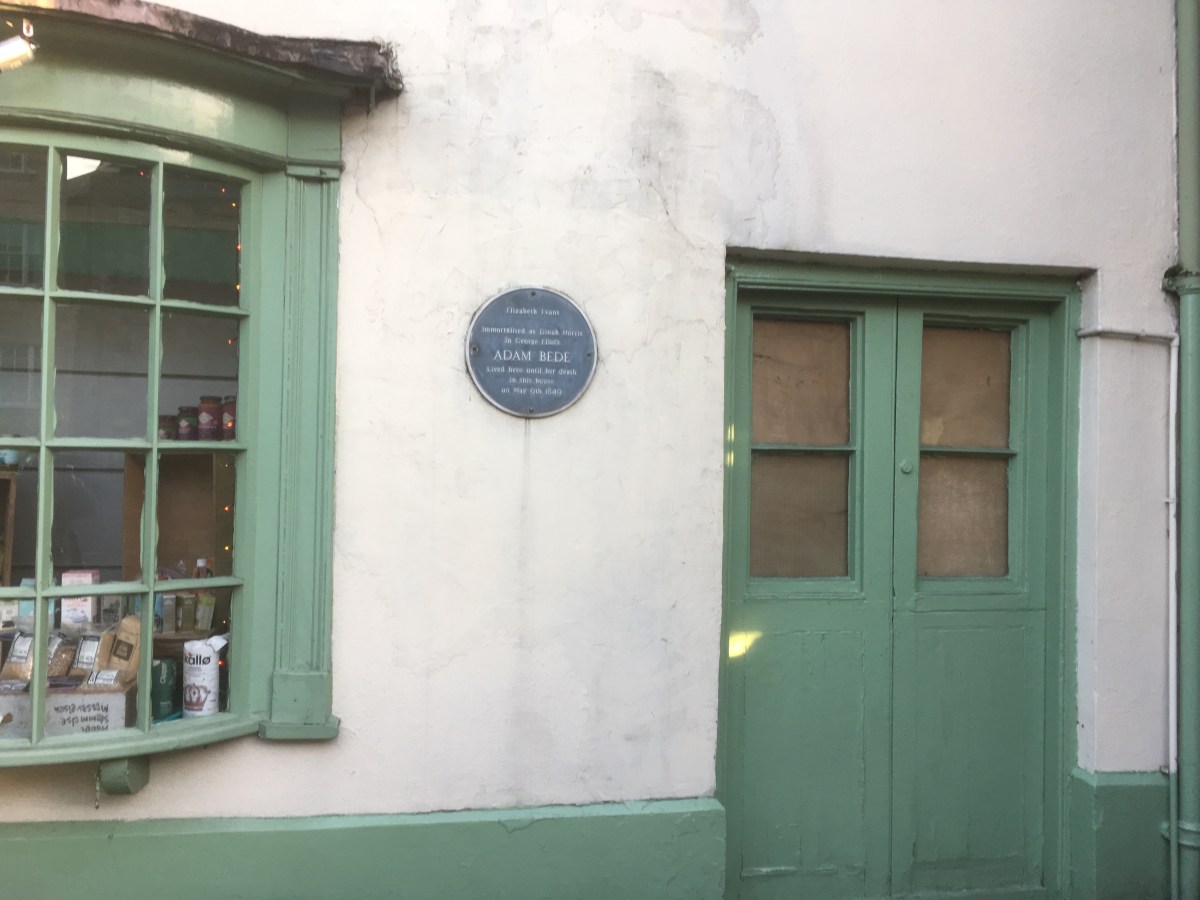
About the main photo

Why this photo on WBD? This blue plaque is in St John’s St, Wirksworth, where most of WWHIC is set. It commemorates Elizabeth Evans, George Eliot’s aunt, who lived and died there in 1849.  George Eliot based the character, Dinah Morris, in ‘Adam Bede’, on Elizabeth. The other main female character in ‘Adam Bede’ is called Hetty…

Categories
Uncategorized

Best reads of 2021

A few years ago I started keeping a record of the books I read. I include ones I don’t finish, as long as I’ve read a significant proportion, and make a note if I simply leave them unfinished, or if I skim-read to the end. Looking back at my lists is satisfying; it reminds me of what I’ve most enjoyed, and also what I haven’t. It also means I can look to see if there are patterns; for example, how diverse, or not, is the list?

When I started this blog I knew I wanted it to be about reading books as well as writing them, so here are my six favourite books from those I read in 2021, in no particular order. And why six? Simply that these stood out from the others.

Looking back at my lists is satisfying; it reminds me of what I’ve most enjoyed, and also what I haven’t


 ‘Reservoir 13’ by Jon McGregor. I’d had this on my to-read pile since I’d bought it secondhand a couple of years ago. It’s an extraordinary novel that straddles genres – part murder mystery, part village drama, part study in grief. I was as gripped by how the story was being told as by the storyline itself. And it was hugely satisfying by the end, and I greatly admire it. 
 
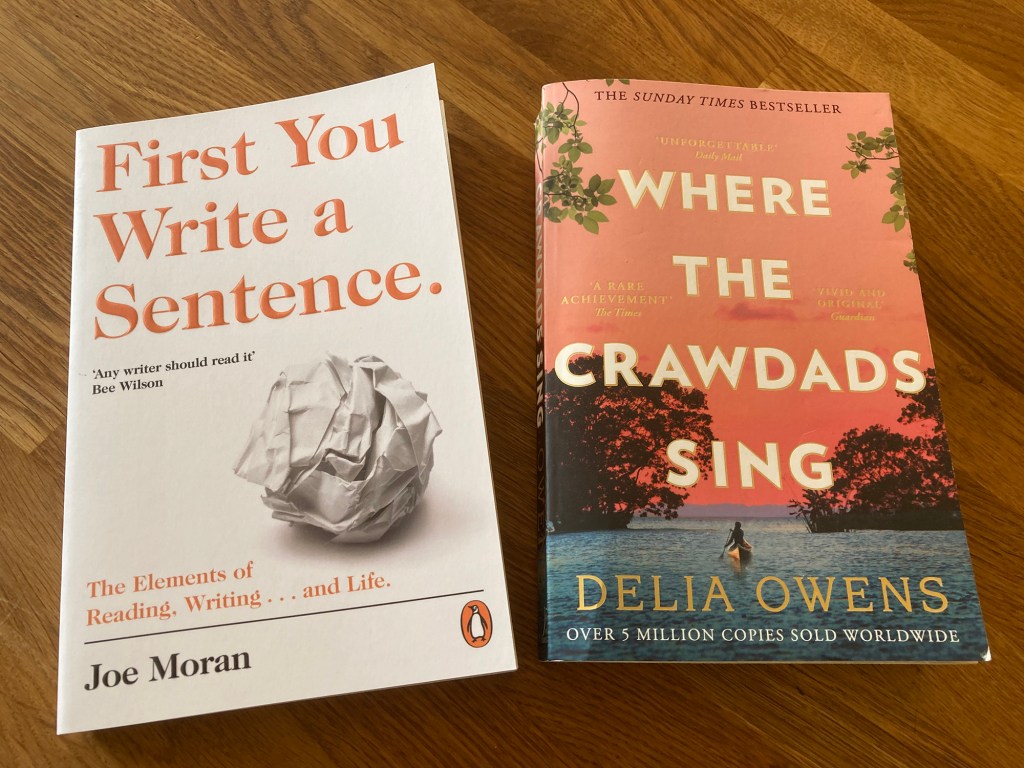
‘First you write a sentence.’ by Joe Moran – one of two non-fiction books on my list. I feel I arrived late to this book, having read articles on and extracts from it since it was published. It’s densely written, and so scholarly and widely-researched.  The section explaining why singers like Frank Sinatra were exceptional in their phrasing, and what we can learn as writers from this, is an example of the width and the depth of the scholarship, and of how entertaining it is.
 
‘Unsettled ground’ by Claire Fuller. Since I started writing this blog, Claire’s book has won the Costa Novel award, which pleases me beyond the fact that I liked it so much. A book like this about rural poverty is rare, and to explore the family relationships at the core of the story in that context made it unforgettable. Reminded me of Bruce Chatwin’s ‘On the Black Hill’. I follow Claire’s blog, and usually get some titles for my to-read list from the list she compiles of her favourite books each year.
 
‘My garden world’ by Monty Don. A year in the life of Monty’s garden and his farm, divided into months, and then further into short essays on the wildlife he observes. Each one is a short story, in effect. Lyrical and informative, this was a soothing and easy read  – a perfect bedtime book for me.
 
‘Transcription’ by Kate Atkinson. I think I’ve read every one of Kate’s books, and usually very soon after publication. This one had got past me until now. I loved the how and the what – the writing and the story, and it has a perfect title of multiple meanings. The way in which the main character becomes known gradually to the reader is so clever.


All these books I admire as much as I have enjoyed them. Which brings me to my favourite book, a novel, of the year’s reading. It is…
 
‘Where the crawdads sing’ by Delia Owens. I don’t think I’ve ever heard of a book as acclaimed as this one has been by people I know, and this includes some who told me they rarely read fiction. It’s been universally and enthusiastically liked. I’ve given it as a present since reading it myself, so am glad to have added about four copies to its sales. Who couldn’t love Kya, and who couldn’t be fascinated by the world Delia creates in this remarkable story? I loved the scientific theme, and the educational element. Much about this story’s themes felt close to my life, and then there is the racism, the misogyny, and the cruelty… It’s a beautiful story, exceptionally told. A perfect YA read, too.

Categories
Uncategorized

Scarthin Books

There is a village in north Derbyshire called Cromford, which is less than two miles from Wirksworth, both of them locations in What we have in common. Cromford is unusual for many reasons; it’s where Richard Arkwright built the first cotton mill in 1771, and is therefore now part of a UNESCO World Heritage Site, as the cradle of the Industrial Revolution, and if you’ve ever been there, or have read WWHIC, you’ll know that it’s situated on a very steep hill – gradient 1 in 8 over the long crawl of 1.4km!

However, it’s probably best known to book lovers as the home of the wonderful Scarthin Books, an independent bookshop established in 1974 by its owner, David Mitchell. This unique shop exists in one of Cromford’s old houses on The Promenade, and to visit it is to enter a world of words, where each room in the house has a different character, shaped by the books, art, and furniture it contains. I discovered the shop in 1990 when I first moved to Derbyshire, and I have loved it ever since. If you go there, plan to spend at least half a day, and visit its vegetarian café when you need to refuel. I used to ask my family to indulge me and take me there on my birthdays, so I could eat chocolate cake and buy books. Or have them bought for me, of course. 

Scarthin Books is now selling What we have in common.  You can imagine how thrilled and honoured I am, that this world-famous bookshop, in the centre of the setting of the story, is now stocking my book. If you would like to buy a copy, you can do so easily by going to Scarthin Books via one of the links on different pages of my website and also here

Categories
Uncategorized

Publication of What we have in common

Friday 3rd December

Today I took delivery of the newly printed and bound copies of What we have in common. Opening the first box had an element of surprise about it – not because it was the wrong book, it was the right book – but it was like insect metamorphosis.  My manuscript, like a caterpillar, had disappeared, and had come back turned into this beautiful book. I knew it was happening, but the experience of seeing and holding the book gave me that sense of surprise and awe. It was worth it in that moment. 

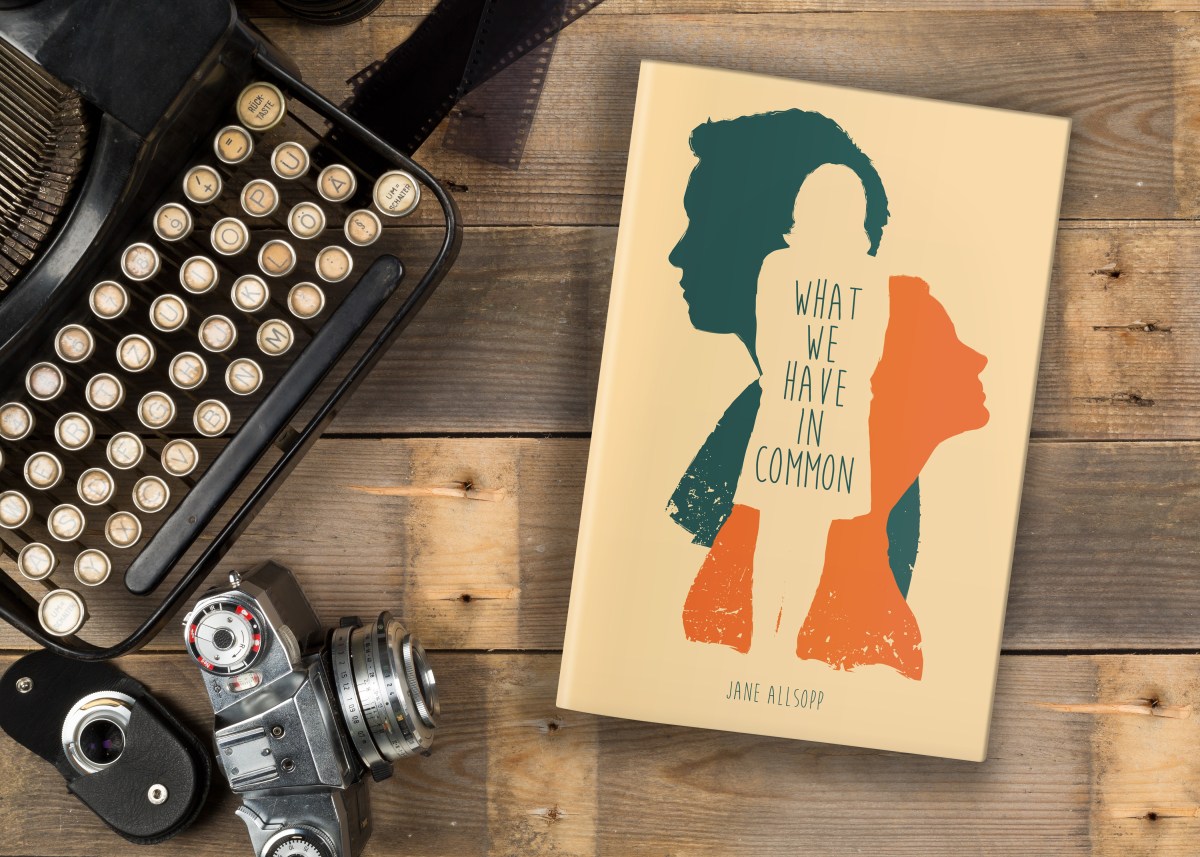
I had been unsure what to expect in working with a graphic designer to create a book cover, and was very fortunate that I found First Graphic Communications Ltd, a local Exmoor firm that specialises in producing printed and online materials, who could both produce the book in print form and also do the graphic design for the cover. Working with Mark and Phil was a delight, and it was extraordinary how they translated my rough descriptions of my vision into the beautiful and striking book jacket for WWHIC. I am in awe of how that metamorphosis worked, too. 

You know that saying that it takes a village to raise a child? I’m wondering what the best metaphor is for the process of producing a book. To have reached this point, poised for publication, it has certainly taken an unexpected number of people to form the ad hoc village to raise the child; printers and jacket designers were always going to be needed, and the proof-reading, publishing and editing advice of Jon Ingoldby gave me the added value of confidence that I could do this. So everybody in this ad hoc team played an important part, and I am grateful to them all, and the beta readers, those early readers over three years ago, most of all.  After all, I’ve written the book to be read. 

Tomorrow I’m having a publication day launch, in a community bar in the next village. We’ll be socially distancing and wearing masks, serving coffee and cakes, and I’ll be signing copies, and all sales will be donations to Parkinson’s UK.

8th December

Publication day on Saturday was so much fun! I loved talking to everyone; both friends and strangers who dropped by. That book jacket feels like silk, and was rightly much admired. To talk over other people talking in the background, and through a mask much of the time, however, meant by the afternoon I had almost lost my voice. Wonderful. I couldn’t have enjoyed the day more, and it was all thanks to the help I had from my family members who came to lend their hands, skills and va va voom, and the people who came and chatted, savoured cake and bought copies. And who donated so generously to Parkinson’s UK. 

 Now I can resume writing Tamwary, which I started in 2018 in one of the lulls while WWHIC  was maturing. That’s at the same time as seeing WWHIC  go out into the world and meet new readers, and I’m really looking forward to hearing what they  – you – think. So please let me know. 

Categories
Uncategorized

Ramblings and musings

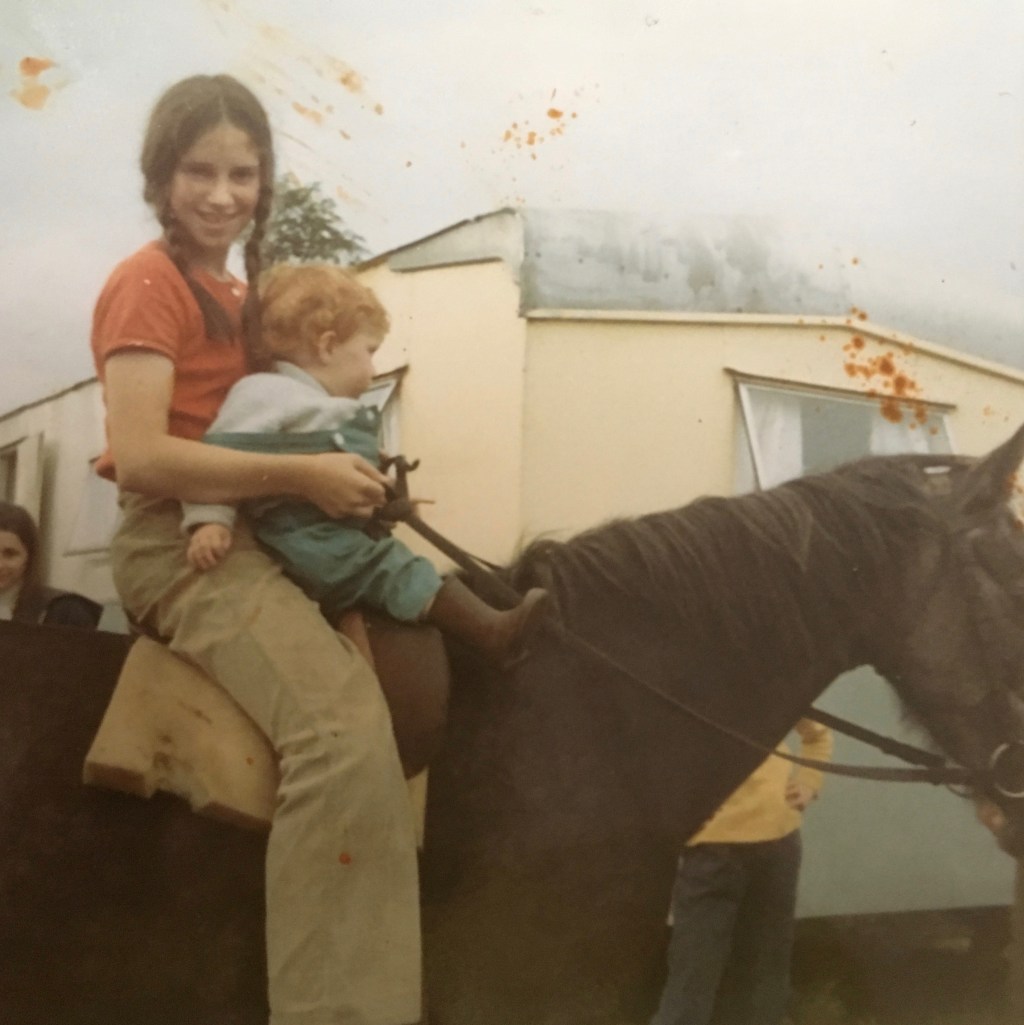
I have always loved reading books. When I was a child I used to read my favourites (usually about horses or the countryside) over and over again. Growing up, my whole family borrowed books from the mobile library, which used to call every month in the more remote Herefordshire villages and hamlets such as ours. When its visits were in school terms, our mother changed our books for us. I never lacked books to read, and I feel very lucky to have had that privilege. And when I wasn’t reading, I was telling myself stories as I played.

Having to go to school stopped me playing outside or reading at home, and I didn’t enjoy it. But I loved learning, especially the sciences, so when I got to the sixth form and focused on those, school improved. I studied pharmacology at university in London, which led to my first career in scientific research. A very short one – I knew soon it wasn’t for me – before I became a schoolteacher. 

After a decade living and working in Cambridge, I moved to Derbyshire, where I had some other jobs before returning to teaching and becoming a headteacher in East London. 

There isn’t a blueprint for what makes a writer, although I guess that some of what I’ve told you here, if you’re someone who wonders about what makes a writer, is unsurprising. You might have nodded with recognition as you took in some of the facts; avid reader, book-privileged childhood, and even school-teaching, given that I am writing novels for children and young people. 

But I’m glad I don’t believe there is a blueprint, because otherwise I might have been put off seeing myself as a writer, not matching up to the blueprint somehow, and have not persevered with writing. I’m writing determinedly now that I’m retired from teaching – that is when I’m not working in my local library, staffed entirely by volunteers in order to keep it open, and working out my stories when I’m walking in the countryside. Do you hear the echoes of my childhood? 

I’m writing this first blog on my website as I’m getting ready for publication of my first novel, which I started writing almost exactly four years ago. Perhaps I’ll write a blog some time soon about that journey. I’ve doubted the book occasionally, and much has happened in my life in that time, so that sometimes I’ve even forgotten about it for a little while. But here we are, the book and me, nearly at our destination, and I’m apprehensive and excited. How will it have travelled? 

I hope you’ll want to read What we have in common, and that you’ll like it.It will be published in a few weeks, and details of the launch will be on my Events page, and I’ll blog about it.

What we have in common was published in December 

Saturday, 4th December was publication day, and you can read more here about the team who helped to launch it, and what happened. To purchase the book, click on the link below or get in touch.

Get the latest news and updates from Jane